Steadfast: Keep The Faith
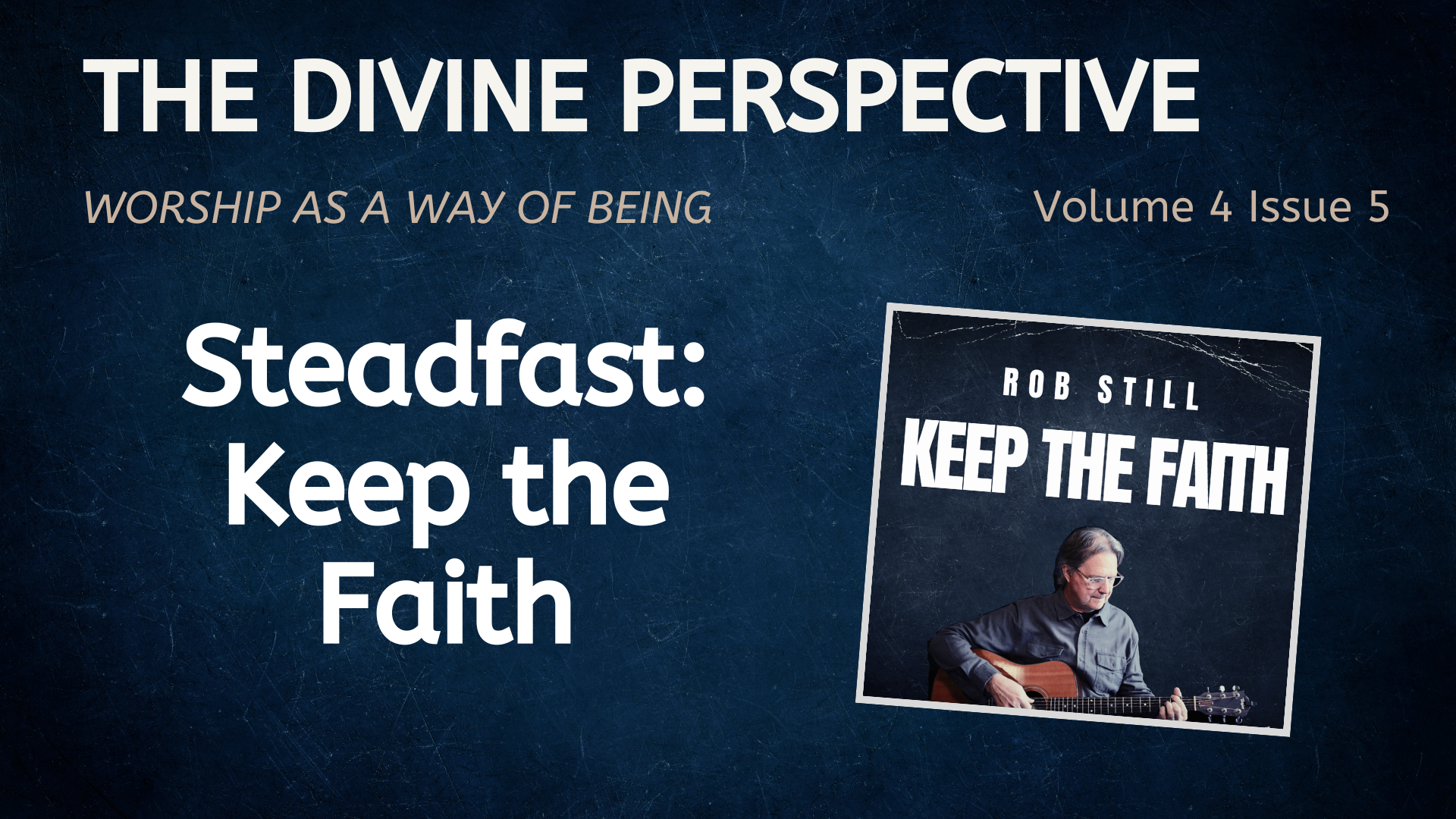
Since the beginning of this year, we have been exploring what it means to live with steadfast faith. Steadfastness is a character trait essential to growing in spiritual maturity.
Our journey began with worship as the starting point (Worship Comes First). We set an intentional and specific course (Theme Word: Steadfast), re-oriented our ambitions to be subjugated to God’s jurisprudence (Let God Choose), learned to walk within God’s timeframe (Step by Step), and accepted the call to be a voice, not an echo (A Steadfast Voice).
With that groundwork established, we now consider the virtue that serves as our true north star —a spirit resolute to keep the faith.
The Inspiration Behind Keep The Faith [album]
One of my goals this year was to finish and share the music project Keep The Faith. After fourteen months of on-again off-again work in the studio, that album is now being released to our community.
The theological themes that undergird this music project gave rise to the focus on steadfastness we have been exploring in this devotional series.
My hope is that this music might encourage others when their faith is under trial.
As the Steadfast series of devotionals has developed, I’ve come to realize that exploring the theological underpinnings of the music can be both insightful and edifying.
Writing adds perspective to what the songs express, but do not fully explain.
The first place to begin is by considering deeply what it means to keep the faith.
Biblical Roots of “Keep the Faith”
“Keep the faith” is a familiar saying, frequently invoked but rarely examined in light of its distinct Christian heritage.
The closest source to the origin of the phrase appears in Paul’s second letter to Timothy. Nearing the end of his life and eager to pass on a legacy of living for the cause of Christ, he writes:
“I have fought the good fight, I have finished the race, I have kept the faith.”
2 Timothy 4:7 (ESV)
In this context, Paul means that the faith is a received belief system—one centered on God, Scripture, and the salvation available only through Christ. It also infers a trust that must both be shared and guarded over time.
The writer of Hebrews echoes this same call:
“Let us hold fast the profession of our faith without wavering…”
Hebrews 10:23 (KJV)
The “profession of faith” proclaims Jesus Christ as God’s final and sufficient High Priest, the final atoning sacrifice, and the sole mediator of reconciliation to God.
What “Keep the Faith” Is Not
To “keep the faith” is not a slogan for don’t-give-up optimism or positive-thinking, hang-in-there encouragement.
When the phrase is reduced to shallow emotional reassurance, it loses the gravity of faith as something biblically received, entrusted, and guarded over time.
The Witness of the Early Church
The earliest Christian writers understood keeping the faith as guarding what had been entrusted to them—especially in the face of persecution. Ignatius of Antioch (early 2nd century), writing on the way to his execution, urged believers to “remain firm in the faith,” meaning steadfast loyalty to Christ even under the threat of death.
To keep the faith, then, meant refusing to deny, dilute, or corrupt the gospel. For Irenaeus of Lyons (c. AD 130–202), the faith referred to the apostolic rule of truth—a sacred trust handed down to be guarded against distortion and heresy.
Tertullian (c. AD 155–220) likewise treated faith as something that could either be kept or betrayed, emphasizing loyalty to the truth.
Centuries later, Thomas Aquinas (1225–1274) affirmed that this same faith could only be protected and preserved through a life ordered toward God—one marked by abiding in Christ.
Abiding in Christ
To keep the faith means more than guarding right belief; it requires remaining connected to Christ Himself.
What has been entrusted to us is preserved as we abide in relationship with Him.
Jesus teaches that faithfulness flows from this ongoing connection. “Abide in me,” He invites His followers in John 15:4, “and I will abide in you.”
Finishing Well
God’s intention is that you and I finish well.
He desires that our lives would bring Him glory.
Would it not be a tragedy in our final days or years to deny the faith, harboring bitterness or disappointment?
Yet it is for God’s glory that we persevere and finish well.
Jesus expresses it this way:
“I have brought you glory on earth by finishing the work you gave me to do.”
John 17:4
What It Means to Keep the Faith
To keep the faith means accepting a weighty responsibility—one that assumes pressure and opposition, and understands that faithfulness can come at a very high cost.
Keeping the faith does not mean shallow optimism or blind belief that everything will work out okay.
To keep the faith means maintaining allegiance to biblical doctrine.
It means pledging relational loyalty to living for God’s glory, over time.
Listen to the Keep The Faith album.
You can hear the songs on Keep The Faith here. These companion essays are offered as a resource for deeper theological reflection and encouragement.
God bless you.
STAY CONNECTED: Sign up for The Divine Perspective, my newsletter that synergizes spirituality, theology, creativity, and personal development from an artist and academic who envisions worship as a way of being.
Thank you for subscribing!
Have a great day!
